The note-taker's tax
The person taking the notes is usually the one you most need in the conversation. And the record stays thin anyway.
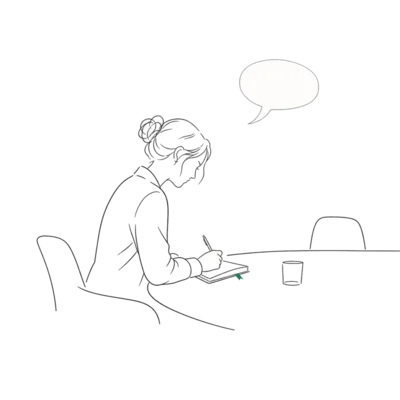
In your next meeting, find the person taking notes. It is probably the one you need fully in the conversation, not half listening.
Usually it is the lead. They know where to push, and they can tell a real objection from a passing remark. And there they sit, head over the pad, trying to follow four people at once while the conversation runs on without them.
The person who understands the topic best is taking the notes. They do it because someone has to and they are responsible. But a recorder does this job better, and they hold on to only a fraction of it.
The split mind and the leak
Whoever takes notes is in two places at once. Part of them follows the conversation, part is on the page, racing to get the last point down before the next one falls.
While they write one sentence, they miss the next. A four-person conversation runs faster than one person can type. So they choose in the moment, keep what seems important, and drop the rest. That is how the quiet objection is lost, the one that would have tipped the decision.
Nobody types as fast as four people talk. And you cannot write down one thought while listening to the next. So only a fraction of an hour reaches the page.
In the gap between what was said and what was written down, the decisions go missing.
Part of it is shorthand nobody else can read. Part is a half-sentence they never finished. What survives as the record is patchy, exactly where it counts.
What a thin record costs later
The bill arrives next week, not this one.
A decision falls. Everyone nods, the meeting runs on, and it lands as a terse line in the notes, or not at all, because the note-taker was still on the last point. A week later someone asks why you went that way. Nobody can find the spot, or the line that survived does not give the reason. So you decide again what the room had decided long ago.
With an action item it is worse, because it fails quietly. It was handed out loud, and the responsible person heard it, but no name ever stood next to it on the page. So the work sits, and a week later the deadline is missed.
You did not trade worse notes for a better meeting. You pay both: the lead was not in the conversation, and the conversation was captured patchily anyway. Now in attention, later in rework, and on every meeting that mattered.
Get your best person back
You do not have to choose between leading and taking notes. Let the recording keep the record. readme works from the audio, so nobody in the room is typing. You get the full transcript, the decisions, the action items with their owners, and who said what, all from the whole conversation.
This time nobody sits with their head down. The lead is in the conversation, hears the quiet objection, and steers the next ten minutes. The recording does not split its attention and does not write with one hand. It hears everything and keeps everything.
The meeting costs you an hour from everyone anyway. Record your next team meeting with readme, read it back, and see for yourself what your best person was missing while they typed.
Try it with your next meeting.
You get a clear summary with every decision and every task. And plenty more.
Try for free